
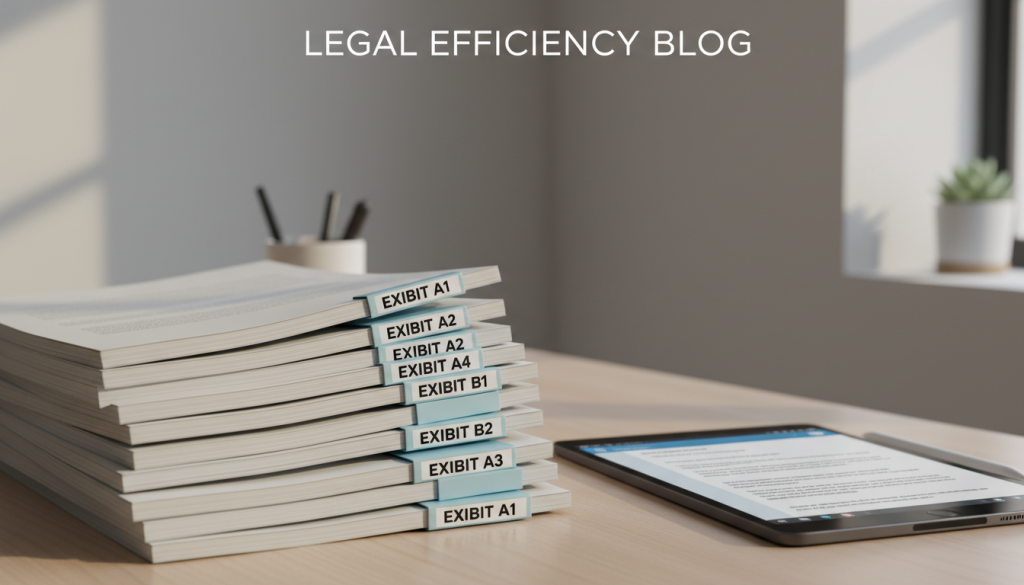
HMCTS Packs: Exhibit References and Numbering – Common Errors
Most HMCTS bundle translation mistakes are not dramatic mistranslations; they are navigation failures. A court-facing pack can contain the right words and still be difficult to use if exhibit labels drift, numbering restarts without warning, headings change shape, or the translated pages no longer match the references used in witness statements, schedules, annexes, and indexes. That is where delays start. A judge, solicitor, barrister, or caseworker should be able to move from the original to the translation in seconds, not spend valuable hearing time trying to work out whether “Exhibit AB/4” is the same document as “Appendix 4” or whether page 117 in the statement is page 117 in the bundle, page 117 in the PDF, or page 117 in the translation only.
That is why the safest way to think about translated court material is this: a translation is not just a language task. It is a reference-preservation task. When that principle is ignored, otherwise strong evidence becomes slow to review, awkward to cite, and harder to trust.
Why this issue causes so many avoidable problems
Court bundles are built for navigation. People reading them are usually moving quickly between:
- a witness statement
- an exhibit label
- a bundle page number
- a document heading
- a chronology or case summary
- a supporting annex or schedule
If a translation changes one of those elements without controlling the others, the whole pack becomes harder to follow. In practice, most problems come from confusing three separate reference layers:
- The exhibit identity — for example, AB/12
- The document description — for example, bank statement for May 2025
- The bundle location — for example, pages C117–C124
A strong translation workflow preserves all three. A weak workflow translates the text but quietly changes the map.
The common mistake nobody notices until the hearing
The biggest mistake is treating the translated version as a standalone document instead of part of the same evidence system. That usually leads to one or more of these outcomes:
- the translated file is renumbered from page 1
- exhibit labels are “tidied up” into a new style
- section headings are translated differently each time
- cover sheets disappear
- handwritten notes, stamps, seals, or marginal comments are omitted
- internal references such as “see page B14” no longer match what the reader sees
Everything may still look polished. It just no longer works as a bundle.
Nine common HMCTS bundle translation mistakes
1. Renumbering the translation as if it were a separate pack
This is one of the fastest ways to break a hearing bundle. If the original evidence is cited by bundle page number and the translated version is delivered with its own fresh numbering, everyone has to stop and translate the references mentally before they can deal with the substance. That is avoidable. A better approach is to preserve the original reference logic and make the translation easy to trace back to it. Where a separate translated document is unavoidable, the cross-reference path should be obvious on the face of the document.
Bad: “Translated Statement.pdf” pages 1–8
Better: “Exhibit AB/3 – Translation” with a clear source reference carried through the document
2. Changing exhibit labels for neatness
Translation teams sometimes change labels because the source system looks messy. “AB/12” becomes “Appendix 12.” “Exh. KJ-4” becomes “Exhibit 4.” “Annex C” becomes “Schedule C.” That feels cleaner, but it creates risk. If the statement, index, chronology, and other side’s correspondence all refer to the original exhibit label, changing that label in translation creates friction immediately. The safer rule is simple: preserve exhibit identity exactly, then translate the descriptive wording around it.
A simple rule that prevents most confusion
Keep the label. Translate the title. So:
- AB/12 stays AB/12
- Annex C stays Annex C
- Exhibit KJ-4 stays Exhibit KJ-4
But the document description, heading, or explanatory note can be translated clearly beside it.
3. Breaking witness statement cross-references
A witness statement may say:
- see Exhibit AB/7
- see page D45
- see the marriage certificate at page C19
- see the handwritten annotation in the lower margin
If the translation does not preserve those pathways, the evidence becomes clumsy to use. That matters far more than many people expect. A judge reading quickly needs to land in the right place immediately. This is why translated exhibits should be checked against the witness statement line by line before delivery, not just spell-checked in isolation.
4. Translating headings inconsistently across the same pack
Court-facing files often repeat the same headings many times:
- Applicant
- Respondent
- Witness Statement
- Annex
- Schedule
- Page
- Date of Issue
- Reference Number
If those headings are translated one way in one document and another way elsewhere, the pack starts to feel unstable. Readers lose confidence, even when the underlying meaning is technically correct. Consistency is not cosmetic; it is part of procedural clarity. A translator handling bundle material should build a micro-glossary at the start of the job and apply it across the whole pack, especially where multiple exhibits relate to the same facts or the same party.
5. Omitting stamps, seals, handwritten notes, and side comments
This mistake is common in urgent work. The main typed text gets translated, but the supporting marks do not. That is dangerous because side content often carries procedural importance. A handwritten date, a clerk’s note, a receiving stamp, a registration entry, or a notation in the margin can explain sequence, authenticity, or timing. If it appears on the source, it should be accounted for in the translation. That does not mean reproducing a seal as artwork; it means describing it clearly and consistently, so the reader knows what appears on the original and where it appears.
6. Merging or splitting exhibits without updating the logic
Sometimes a source exhibit arrives as one document, but the translation is delivered as several files. In other cases, multiple small exhibits are merged into one translated PDF “for convenience.” Convenience for the translator often becomes inconvenience for the court. If the bundle structure changes, the reference structure must be rebuilt with equal care. If not, the index, statement references, and file names all start pointing at slightly different things. The safest course is to mirror the source structure unless there is a very clear reason not to.
7. Restarting numbering inside sections without checking the bundle system
Different packs use different numbering logic. Some rely on continuous numbering from start to finish. Others use section-based numbering. Problems arise when the translation team assumes the wrong model and quietly restarts the count. That is how page 24 becomes A24 in one place, C24 in another, and simply 24 in the translation. Before any translation starts, someone should confirm:
- whether numbering is continuous or sectional
- whether the PDF numbering must match the visible numbering
- whether the index has already been finalised
- whether any translated material is being inserted later
If that conversation happens early, many downstream errors disappear.
8. Delivering readable text but unreadable bundle presentation
A translation can be linguistically good and still fail as a court document if the layout is hard to navigate. Typical presentation problems include:
- headings that no longer match the source hierarchy
- cramped text that hides section breaks
- translated pages with no obvious connection to the original
- tables that collapse into paragraphs
- landscape pages turned awkwardly
- photo pages or signatures inserted without context
Bundle usability matters. Clear headings, stable formatting, visible section breaks, and predictable reference placement make a real difference when a file is being reviewed under time pressure.
9. Correcting pages late without showing what changed
Last-minute fixes are common. A name is corrected. A missing note is inserted. A stamp description is added. A page is replaced. The mistake is sending the revised page as if nothing changed. That creates version confusion straight away. If one person is looking at the earlier translation and another is looking at the corrected page, oral references become messy very quickly. Where late changes are unavoidable, they should be controlled carefully and labelled clearly, with the same discipline applied to the translation as to the bundle itself.
What a court-friendly translated bundle looks like
A usable translated pack is easy to navigate even for someone who has never seen the case before. It usually has these qualities:
- exhibit labels preserved exactly
- headings translated consistently
- original and translation easy to match
- numbering logic explained or mirrored clearly
- stamps, signatures, notes, and annotations accounted for
- file names that identify the document properly
- cross-references checked against statements and indexes
- a final review focused on navigation, not just wording
Weak approach vs better approach
| Weak approach | Better approach |
|---|---|
| Translation delivered as a separate “clean” PDF with fresh numbering | Translation delivered with preserved source references and clear document identity |
| Exhibit AB/5 renamed as “Appendix 5” | Exhibit AB/5 kept exactly, with translated title beside it |
| Only typed body text translated | Typed text plus stamps, notes, signatures, and handwritten content accounted for |
| Witness statement references checked only informally | Every cited exhibit and page reference checked before delivery |
| Layout simplified for speed | Layout controlled so the translated file remains easy to compare with the source |
A practical workflow for translated exhibits
Before translation starts
Send the full pack, not cropped pages where possible. That should include:
- the source document
- the current bundle index
- any witness statement referring to the exhibit
- the naming convention already being used
- the deadline and hearing date
- any case-specific instruction about bundles, filing, or numbering
This gives the translator the bundle logic, not just the language content.
During translation
The translator should preserve the source map while translating the content. That usually means checking:
- exhibit label format
- section heading style
- page reference style
- names, dates, and reference numbers
- stamps, notes, and endorsements
- whether document order must remain exactly the same
Before delivery
A proper final check should ask:
- Can a solicitor move from the statement to the exhibit without hesitation?
- Can a judge identify the source document immediately?
- Do the headings match across related documents?
- Are page references still usable?
- Has every visible mark on the source been dealt with?
- Does the delivered file naming make sense to someone outside the project?
That is the standard that reduces friction.
A typical case snapshot
A common rescue job looks like this: A party has a multilingual evidence pack containing certificates, bank evidence, correspondence, and a witness statement referring to exhibits by label and page number. The wording of the translation is broadly fine, but the translated pages have been renumbered from 1, several exhibit labels have been rewritten into a new format, and a receiving stamp on one document has been omitted. The fix is not just “proofreading.” It involves rebuilding the reference integrity of the pack:
- restoring the original exhibit labels
- aligning translated headings across the set
- checking every statement reference
- adding notes for stamps and handwritten marks
- renaming files so they match the bundle logic
- making the original and translation easy to compare
That is the difference between a translation that merely reads well and one that works inside a hearing file.
What to send if your deadline is tight
Urgent court-facing work can still be done properly, but only if the brief is complete. Send:
- the full original file
- the bundle index
- the current exhibit list
- any statement that cites the document
- your deadline
- the required output format
- any instruction already received from the court or solicitor
The more context the translator has, the less chance there is of reference drift. If the file is already partly built into a larger pack, say so at the start. That small detail often prevents avoidable numbering mistakes later.
Why this matters more than people think
A weak court translation rarely fails because of one dramatic error. It usually fails because dozens of small structural issues create hesitation. The judge hesitates. Counsel hesitates. The witness is taken to the wrong page. A cross-reference has to be explained out loud. The hearing loses time. The evidence feels harder to trust than it should. That is why professional translation for bundle material should protect both meaning and navigation. If your pack includes witness statements, annexes, certificates, bank evidence, court orders, or supporting correspondence, the safest move is to have the whole reference chain checked before filing. That means labels, numbering, headings, formatting, and visible marks — not just the body text.
Need a fast court-ready translation? Send the full file set at the start, along with the index and hearing deadline, so the pack can be prepared as one controlled submission rather than a stack of disconnected translated pages.
Work with a team that treats bundle structure seriously
Next Day Translation supports legal, official, and urgent document work where presentation matters as much as wording. For court-facing files, that means taking care with labels, numbering, headings, and document consistency from the beginning. If you are dealing with multilingual evidence under time pressure, the safest brief is the complete one: full source file, current bundle structure, and filing deadline. That gives the translation team the best chance of returning a pack that is clear, consistent, and ready to use. Start early where possible. But if the hearing date is close, send the complete documents rather than selected pages. That one step alone prevents many of the most common HMCTS bundle translation mistakes.
FAQs
Do translated exhibits need to keep the same exhibit labels?
Yes. In most court-facing files, changing the exhibit label creates unnecessary confusion. The safer approach is to keep the original label exactly as it appears and translate the descriptive wording around it.
Can I number the translated pages from page 1?
You can, but it often creates avoidable confusion if the source bundle is already cited by page number. For bundle work, the better approach is to preserve or clearly map the original reference system so the translation remains easy to follow.
Do stamps, seals, and handwritten notes need to be included in a court translation?
They should be accounted for. Even where they are brief, they can affect timing, authenticity, or context. A court-ready translation should not ignore visible marks just because they are not part of the main typed body text.
What is the most common HMCTS bundle translation mistake?
The most common problem is breaking the reference chain — changing exhibit labels, page numbering, or headings so the translated file no longer matches the statement, index, or original bundle.
Should I send only the pages that need translation?
For simple standalone documents, that may be enough. For court bundles, it is usually better to send the full pack or at least the surrounding reference material so the translator can preserve numbering, labels, and cross-references properly.
What should I send for urgent HMCTS bundle translation?
Send the source files, bundle index, exhibit list, any statement that cites the documents, the hearing date, and the required format. That lets the translation be prepared with the bundle logic in mind, not just the words on the page.
Need a court document translated without breaking the reference chain? Use our court order translation service or send the bundle details for review.